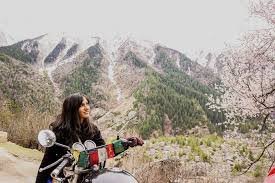

There’s a certain kind of traveler you start noticing after a while. Not the one rushing through itineraries or chasing selfies at every landmark. This one lingers a bit longer. Talks to locals. Notices small things — the way a forest sounds at sunrise, or how a village prepares for a festival.
This shift in travel behavior isn’t loud, but it’s real. More people are beginning to care about how they travel, not just where they go. And that’s where eco-tourism enters the picture, quietly but steadily.
What Eco-Tourism Actually Feels Like on the Ground
Eco-tourism isn’t just about staying in a “green” resort or skipping plastic bottles. It’s more layered than that.
It’s about experiences that respect nature and support local communities. That could mean staying in a homestay instead of a hotel, choosing guided treks led by locals, or visiting places that actively work on conservation.
In India, this often translates into destinations that feel less commercialized. You don’t always get luxury, but you get authenticity. And for many travelers, that trade-off is starting to feel worth it.
A Subtle Shift in Traveler Mindsets
A few years ago, eco-tourism might have sounded niche — something only a small group of conscious travelers would consider. But now, it’s slowly moving into the mainstream.
Part of this comes from awareness. Climate change, environmental impact, over-tourism — these topics aren’t abstract anymore. People are seeing their effects firsthand.
And naturally, it leads to questions. Can travel be less harmful? Can it even be beneficial?
That curiosity is driving change, even if it’s happening in small steps.
So, How Is It Growing in India?
If you look closely, you’ll notice eco-tourism popping up in different forms across the country.
Forest stays in Uttarakhand. Community-led tourism in Meghalaya. Sustainable beach resorts in Kerala. Wildlife conservation projects in Madhya Pradesh.
Each region is finding its own way to balance tourism with preservation.
This is where Eco-tourism destinations India me kaise grow kar rahe hain? becomes an interesting conversation. It’s not a uniform trend. Growth looks different depending on local resources, policies, and community involvement.
The Role of Local Communities
One of the most important aspects of eco-tourism is who benefits from it.
In many successful models, local communities are directly involved. They manage accommodations, guide tours, and share their culture with visitors. This creates a more inclusive system where tourism income stays within the region.
It also changes the traveler’s experience. Instead of being an outsider, you become a participant — even if just for a few days.
That connection adds something you don’t always get in traditional tourism setups.
Government and Policy Support (Slow but Visible)
Government initiatives are starting to play a role too, though progress can feel uneven.
Some states have introduced policies promoting sustainable tourism, eco-sensitive zones, and responsible travel guidelines. There’s also growing support for infrastructure that aligns with environmental goals.
But implementation is key. Policies on paper don’t always translate smoothly on the ground. Still, the intent is there, and that matters.
Challenges That Can’t Be Ignored
As promising as eco-tourism sounds, it’s not without its complications.
One major challenge is balancing growth with sustainability. Increased popularity can sometimes lead to the very problems eco-tourism aims to avoid — overcrowding, waste, resource strain.
Then there’s the issue of “greenwashing.” Some places market themselves as eco-friendly without genuinely following sustainable practices. For travelers, it can be hard to tell the difference.
And of course, accessibility remains a factor. Many eco-tourism destinations are located in remote areas, which isn’t always convenient for everyone.
The Experience Is Different — And That’s the Point
If you’re used to fast-paced travel — ticking off attractions, staying in comfortable hotels, following tight schedules — eco-tourism might feel unfamiliar at first.
It’s slower. Less structured. Sometimes unpredictable.
But that’s also its strength.
You notice more. You engage more. And oddly enough, you remember more. The experience stays with you in a way that rushed travel often doesn’t.
The Influence of Social Media (For Better or Worse)
Social media has played a role in bringing attention to lesser-known destinations. A beautiful eco-stay or a hidden forest trail can quickly gain visibility.
This helps small communities attract visitors. But it also comes with risks. Sudden popularity can overwhelm fragile ecosystems if not managed carefully.
It’s a double-edged sword — visibility brings opportunity, but also responsibility.
Looking Ahead: A Gradual, Thoughtful Expansion
Eco-tourism in India isn’t exploding overnight. It’s growing steadily, shaped by awareness, demand, and local efforts.
The future will likely depend on how well stakeholders — governments, communities, travelers — work together. Sustainability isn’t just a feature; it’s a continuous process.
And maybe that’s the key. Not rushing growth, but allowing it to develop in a way that stays true to its purpose.
Final Thoughts
Travel has always been about discovery. But now, it’s also becoming about responsibility.
Eco-tourism offers a way to explore without leaving a heavy footprint. It’s not perfect, and it’s still evolving, but it’s a step in a direction that feels necessary.
Because in the end, the places we visit aren’t just destinations. They’re living ecosystems, communities, stories.
And how we travel through them… matters more than ever.