Water quality isn’t something most people think about until there’s a problem. A strange taste in the kitchen, cloudy water, mineral deposits around faucets, or equipment that suddenly needs more maintenance can all be signs that the water supply deserves a closer look.
For homes and businesses, the good news is that modern treatment options can address many different water-quality concerns. But choosing the right solution isn’t simply about buying the most expensive filter available. It starts with understanding what’s actually in the water and what you want the treatment system to accomplish.
A little knowledge can go a long way here.
Why Water Quality Can Be Complicated
Water can contain a mixture of naturally occurring minerals, sediment, disinfectants, and other substances picked up as it travels through the environment and distribution system.
Some characteristics are harmless but unpleasant. Others can create practical problems for plumbing and equipment. Certain applications may require much more carefully treated water than a typical household needs.
That’s why water treatment isn’t really a one-size-fits-all subject.
A family concerned about taste and odor may need something fairly simple. A commercial facility protecting sensitive equipment could require several treatment stages working together.
Start With Testing, Not Guesswork
Before selecting treatment equipment, it’s smart to understand the starting water.
A water analysis can provide useful information about hardness, pH, dissolved solids, sediment, chlorine, iron, sulfur, and other characteristics. Private well owners may want to test periodically because groundwater conditions can change.
Testing helps identify the actual problem instead of treating symptoms.
For example, a carbon filter may be useful for certain taste and odor concerns, while a water softener is designed primarily to address hardness. Reverse osmosis can reduce many dissolved substances, while other technologies are intended for more specific applications.
Knowing the difference can save both money and frustration.
What Does Advanced Media Mean?
Modern filtration technology has come a long way from the basic filters many people remember.
Some treatment systems use advanced media specifically selected for particular water-quality goals. Different media can have different physical and chemical properties, allowing treatment equipment to target specific substances or improve overall filtration performance.
The important thing is that “advanced” doesn’t automatically mean “better for everyone.”
A treatment medium should be selected according to the incoming water and desired results. Using specialized media without understanding the problem can add unnecessary expense without delivering much practical value.
The right media is the one doing the right job.
Filtration Is About More Than Appearance
Clear water isn’t necessarily the same thing as treated water.
Many substances dissolved in water are invisible. You can’t look into a glass and determine its mineral content, hardness, or dissolved solids.
That’s why remove impurities is a broader concept than simply making water look cleaner.
Different filtration technologies work in different ways. Some physically trap particles, while others use adsorption, ion exchange, membranes, or other processes to reduce specific substances.
This is also why treatment claims should be examined carefully. Always ask what a particular filter is designed to reduce and under what conditions it performs that way.
Hard Water Can Create Persistent Problems
Hard water is one of the most common concerns for households and businesses.
Calcium and magnesium can form deposits on fixtures, plumbing components, heating elements, and appliances. You may notice white spots on dishes or buildup around faucets, but the more important effects can happen inside equipment where they’re harder to see.
Commercial facilities can be particularly affected because their equipment may process large quantities of water every day.
When hard water is an issue, softening or another appropriate conditioning method may help reduce scale-related concerns.
Why Scale Formation Matters
Scale doesn’t simply look unattractive.
Inside equipment that heats water, mineral deposits can interfere with heat transfer. In other equipment, buildup can restrict passages, affect valves, or increase cleaning and maintenance requirements.
Appropriate water treatment can inhibit scale formation by addressing the water characteristics that contribute to deposits.
However, treatment should not be considered a replacement for routine maintenance. Equipment still needs cleaning and servicing according to the manufacturer’s recommendations.
Think of water treatment as prevention working alongside maintenance, not instead of it.
Protecting Water-Using Equipment
Modern businesses can depend on a surprising amount of water-using equipment.
Restaurants may have espresso machines, ice makers, dishwashers, steamers, and water heaters. Hotels have extensive plumbing systems and guest-room fixtures. Manufacturing operations may use treated water directly in production.
When water quality isn’t appropriate for those applications, maintenance demands can increase.
The right treatment approach can help create better operating conditions for equipment, potentially reducing certain water-related stresses over time.
It won’t prevent every mechanical failure, but it can remove one avoidable source of trouble.
Different Filters Solve Different Problems
It’s tempting to think of filtration as one broad category, but there’s a lot going on underneath that label.
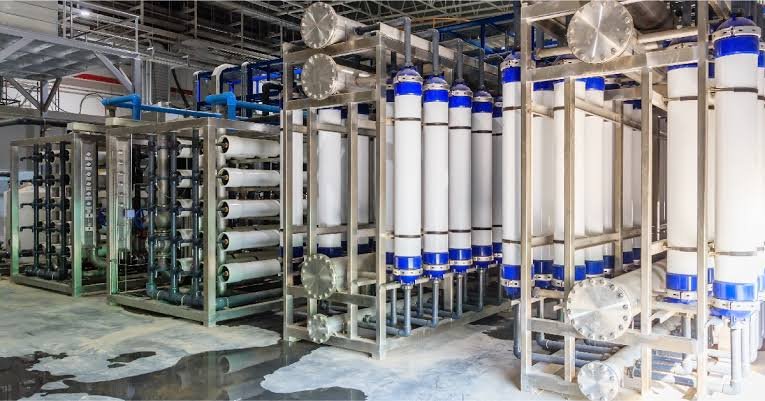
Sediment filters are designed for particles. Activated carbon can address certain chlorine, taste, and odor concerns. Water softeners target hardness. Reverse osmosis membranes reduce many dissolved substances.
More specialized technologies may be appropriate when a particular contaminant or process requirement calls for them.
This is why buying a filter solely because it has a large number of filtration stages isn’t necessarily wise.
Five stages aren’t automatically better than three. What matters is whether those stages are useful for your water.
Commercial Applications Need More Planning
Commercial systems usually need to account for much more than basic water quality.
Flow rate, peak demand, storage, equipment requirements, operating hours, and available space all matter.
A restaurant may experience its highest water demand during lunch or dinner service. A manufacturing facility may need a steady supply throughout production. An office building has a different usage pattern again.
Proper sizing ensures the treatment system can keep up when the business actually needs it.
An undersized system can become a bottleneck, while an unnecessarily large system may cost more to install and operate.
Pretreatment Can Protect the Main System
In some applications, water needs to be treated in stages.
Sediment may be removed before water reaches more sensitive components. Hardness can be addressed before reverse osmosis. Carbon treatment may be used to reduce certain substances that could affect downstream equipment.
The exact setup depends on the source water.
This staged approach can make the overall treatment process more reliable because each component has a defined purpose.
It’s a bit like preparing a meal. You don’t throw everything into the same pan and hope for the best.
Maintenance Still Matters
Even high-quality treatment equipment needs routine attention.
Filters become exhausted. Media eventually needs replacement or regeneration. Membranes require monitoring and, eventually, cleaning or replacement. Pumps, valves, tanks, and other components also need inspection.
A maintenance schedule should be established from the beginning.
Businesses should know how often consumables need replacement and what ongoing service costs are likely to be. Keeping records can also make it easier to spot gradual changes in system performance.
A small maintenance task today is usually preferable to an emergency repair tomorrow.
Don’t Get Distracted by Big Claims
Water-treatment marketing can sometimes make everything sound effortless.
Phrases like “maximum purity,” “advanced purification,” and “complete protection” may catch attention, but they don’t tell you enough by themselves.
Ask practical questions instead.
What does the system actually reduce? What is its capacity? What water conditions does it require? How often does it need maintenance? What happens when the filter or media reaches the end of its service life?
Clear answers matter much more than impressive wording.
Choosing a Treatment System That Makes Sense
The best treatment system is the one that matches the actual need.
Start with testing. Identify the water-quality concerns. Consider how the water will be used. Then choose technologies that address those specific requirements.
For some properties, straightforward filtration may be enough. Others may benefit from softening, reverse osmosis, specialized media, or a combination of treatment methods.
There’s no advantage in making the system more complicated than necessary.
The Bottom Line
Good water treatment is really about solving the right problem.
Advanced filtration media can target specific water-quality concerns, while appropriate treatment can help reduce unwanted substances and manage issues such as mineral scale. But none of it works well when the system is chosen without understanding the water first.
Test the supply. Know what you’re trying to accomplish. Choose equipment based on real requirements, and keep it properly maintained.
When those pieces come together, water treatment becomes less of a mystery and more of a practical part of keeping a home or business running smoothly.