Water can feel ordinary until a business depends on it. Then suddenly it becomes part of everything. It is in the coffee served to customers, the steam used in equipment, the rinse cycle in production, the laboratory process, the ice machine, the boiler, the washer, the cooling system, and the final product in more industries than people realise.
At home, poor water quality is annoying. In business, it can be expensive.
A café may notice the flavour of its coffee changing. A hotel may fight scale on fixtures and laundry equipment. A lab may need consistency that ordinary tap water simply cannot provide. A manufacturer may find that even small changes in water quality affect performance, cleaning, or product standards. It’s not always dramatic. Sometimes the signs are small and easy to dismiss. But over time, water quality has a habit of showing up on the balance sheet.
Why Better Water Starts With Understanding the Job
Not every business needs the same kind of water. That sounds obvious, but it is where many mistakes begin. A restaurant, dental practice, car wash, brewery, office building, school, and production facility all use water differently. The volume changes. The quality requirements change. The risks change too.
Some businesses only need water that tastes better and protects equipment from scale. Others need water with very low dissolved solids, controlled mineral levels, or reduced microbial concerns. In more technical environments, even a small inconsistency can create headaches.
This is why high-purity water is such an important topic for certain businesses. It is not about making water sound fancy. It is about producing water that meets a specific standard for a specific purpose. Laboratories, healthcare facilities, food and beverage companies, electronics operations, and industrial processes may all require water that is far more controlled than standard municipal supply.
And honestly, when the process depends on water, “good enough” becomes a risky phrase.
The Hidden Problems Inside Ordinary Water
Most water looks fine when it comes out of the tap. Clear water gives people confidence. But clarity does not tell the whole story. Water may contain dissolved minerals, chlorine, sediment, metals, organic compounds, hardness, or other substances that affect how it performs.
Hard water can create scale inside heaters, pipes, valves, and equipment. Chlorine can affect taste and odor. Sediment can clog small parts. Iron can stain surfaces and damage presentation. Total dissolved solids may interfere with processes that need precision. In some settings, inconsistent water quality can also lead to uneven results, wasted product, and more frequent maintenance.
That’s the uncomfortable part. The problem may not be visible until equipment starts struggling.
A boiler working harder than it should. A steam unit requiring frequent cleaning. A dishwasher leaving marks. A reverse osmosis system losing pressure because pre-treatment was ignored. These are not just water problems; they become time problems, repair problems, and sometimes customer experience problems.
Filtration Is Not One Single Thing
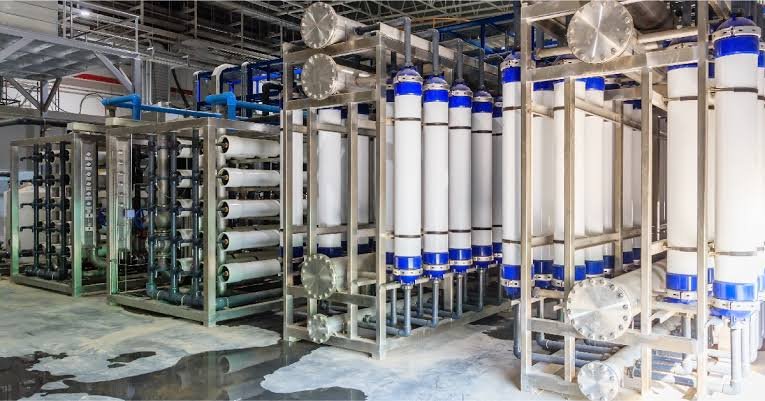
Many people hear “water filter” and imagine one simple cartridge under a sink. For businesses, filtration can be much more layered. A system may include sediment filtration, carbon treatment, softening, reverse osmosis, ultraviolet disinfection, deionization, or other steps depending on the water test and the desired outcome.
The goal of contaminant removal is not always the same from one business to another. For one company, it may mean improving taste and reducing chlorine. For another, it may mean removing dissolved solids, iron, scale-forming minerals, or particles that interfere with equipment. The right system depends on what is actually in the water, not just what someone guesses from a stain or smell.
That’s why testing matters so much. Without a proper water analysis, businesses can easily overspend on equipment they don’t need or underinvest in a system that cannot keep up. Neither situation is ideal.
Where Commercial Needs Get More Complicated
Business water systems usually work harder than residential systems. They may run longer hours, support higher volumes, and serve multiple points of use. A small under-sink filter that works beautifully at home might be completely wrong for a busy restaurant or manufacturing floor.
This is especially true for commercial applications where downtime is costly. If water treatment fails in a café, beverage quality may drop. If a hotel laundry system struggles, guests notice. If a production process depends on consistent water, interruptions can delay orders or affect quality control. Water treatment, in these cases, is not a background luxury. It is part of the operation.
System design has to account for peak demand, flow rate, storage needs, pressure, maintenance access, pre-treatment, and future growth. A business that is expanding should not install a system that barely meets today’s usage. That is like buying shoes one size too small because they look fine in the shop.
Maintenance Is Where the Real Value Lives
A good water treatment system can do a lot, but it cannot look after itself forever. Filters clog. Membranes wear. Resin beds need attention. UV lamps lose intensity. Cartridges reach capacity. When maintenance slips, performance drops quietly at first, and then very obviously later.
Keeping a service schedule is not glamorous, but it is one of the best ways to protect the investment. A simple maintenance plan can help businesses avoid emergency repairs, inconsistent water quality, and unnecessary equipment strain. It also helps staff know what to expect instead of reacting only when something goes wrong.
In many companies, water treatment only gets attention after a failure. A better approach is to treat it like any other essential system: inspect it, document it, service it, and review performance over time.
Cleaner Water Supports Better Work
The value of better water is often quiet. Customers may not thank a restaurant for clear ice. Staff may not celebrate a scale-free kettle. A lab team may not talk much about reliable water quality when everything is running well. But when water causes trouble, everyone notices.
That is why serious businesses should think about water before it becomes a daily frustration. Testing, planning, proper system design, and routine maintenance can help protect equipment, improve consistency, and support better results across the workplace.
Clean water is not just about what comes out of the tap. It is about what happens after that — inside machines, inside products, inside customer experiences, and inside the small routines that keep a business moving. When water works properly, the whole operation feels a little steadier. And in business, steadier is often worth more than people think.